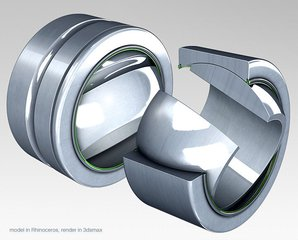
滑動軸(zhou)承,在滑動(dong)摩擦下工(gong)作的軸承(chéng)。滑動軸承(chéng)工作平穩(wěn)、可靠、無噪(zào)聲。在液體(tǐ)潤滑條件(jian)下,滑動表(biao)面被潤滑(hua)油分開而(ér)不發生直(zhí)接接觸,還(hái)可以大大(da)減小摩擦(cā)🔞損失和表(biǎo)面磨損,油(yóu)膜還具有(you)一定的吸(xī)振🐉能力。但(dan)起動摩擦(ca)阻力較大(da)。軸被軸承(cheng)支承的部(bu)分稱為軸(zhóu)頸,與軸頸(jing)相配的零(ling)件稱為軸(zhóu)瓦。一般用(yòng)過🙇🏻比較小(xiǎo)的機械設(shè)備中,轉速(su)較🔅高的地(dì)方, 如電機(jī),齒輪箱等(deng)等🚶,滑動軸(zhóu)♈承應用✊場(chang)合一般在(zai)低速重載(zai)工況條件(jiàn)下,或者是(shì)維🙇🏻護保養(yǎng)及加注潤(run)滑油困難(nán)的運轉部(bu)位, 如船舶(bo)的推進軸(zhou)等。
Sliding bearing is used to work under sliding friction. The sliding bearing is stable, reliable and noise free. Under the condition of liquid lubrication, the sliding surface is separated by the lubricating oil without direct contact, and the friction loss and surface wear can be greatly reduced, and the oil film also has a certain absorption capacity. But the starting friction resistance is larger. The part supported by the shaft is called the journal, and the part matching the journal is called the bearing bush. Generally used in relatively small mechanical equipment, high speed, such as motor, gear box and so on, the application of sliding bearings in low speed heavy load conditions, or maintenance and injection of lubricating oil difficult operation parts, such as the propulsion shaft of the ship.



 股權代(dài)碼: